
Abstract: Samuel Hahnemann’s clinical work across three distinct phases of his career—Early (1793–1810), Middle (1831–1833), and Late (1837–1842)—provides a coherent and progressively refined methodology for epidemic disease management. Drawing on 32 archived medical case journals examined by Hanspeter Seiler and preserved at the Institute for the History of Medicine of the Robert Bosch Foundation in Stuttgart, Germany, this article traces Hahnemann’s development of the Genius Epidemicus concept, his evolution from material doses to C- and Q-potencies, and his increasing use of antipsoric remedies following acute epidemic illness. Findings are further applied to COVID-19 through the Clificol project, arguing that antipsoric prescribing after acute infection is consistent with Hahnemann’s approach. Taken together, Hahnemann’s epidemic cases yield a reconstructed two-step treatment model—an acute epidemic remedy or small remedy group during the infectious phase, followed by deeper antipsoric treatment in the post-acute phase—with direct implications for the homeopathic debate on pandemic illness and Long COVID.
Keywords: Hahnemann; Genius Epidemicus; epidemic; pandemic; antipsoric; Long COVID
The COVID-19 pandemic has renewed interest in epidemic management strategies, including those developed within homeopathy. Samuel Hahnemann (1755–1843) practiced medicine across more than six decades and left detailed clinical records documenting his responses to the major epidemic diseases of his era. These records—scarlet fever, cholera, influenza, and others—represent a largely underutilized resource for contemporary homeopathic practitioners facing pandemic conditions.
This article reviews key epidemic cases from Hahnemann’s three developmental phases as identified and analyzed in secondary scholarship by Haehl1, Seiler2, Ritter3 and Varady4, as well as primary sources archived at the Institute for the History of Medicine of the Robert Bosch Foundation in Stuttgart, Germany.5 The analysis culminates in a discussion of the Clificol Covid Support Project findings6 and their alignment with Hahnemann’s clinical methodology, particularly his evolving use of the Genius Epidemicus and antipsoric remedies.
The central interpretive question is not only historical. By reconstructing a coherent epidemic treatment model from Hahnemann’s own developmental trajectory, the article proposes its relevance for current homeopathic debate about pandemic illness and Long COVID, an area where the historical record has been insufficiently brought to bear.
Hahnemann’s original medical journals, correspondence, and case records are preserved at the Institute for the History of Medicine of the Robert Bosch Foundation, Stuttgart, Germany (https://www.igm-bosch.de). Thirty-two case journals were analyzed by Hanspeter Seiler in his foundational monograph.2 These journals—partially written in personal code—illustrate both the richness and the difficulty of the surviving source material and have been deciphered in part through Hahnemann’s correspondence with his colleague and student Clemens von Bönninghausen.
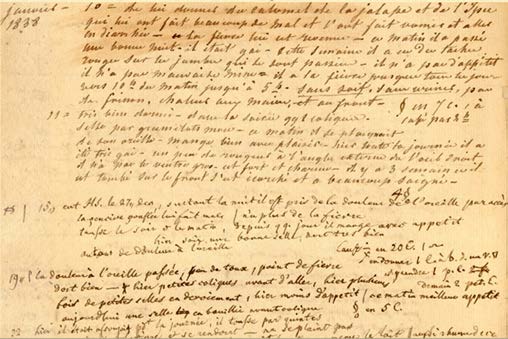
Figure 1. Page from Hahnemann’s patient journals. Source: Institute for the History of Medicine of the Robert Bosch Foundation, Stuttgart, Germany.
Additional primary publications consulted include Hahnemann’s 1801 treatise on scarlet fever7 and his 1831 treatise on cholera.8
Hahnemann’s clinical career is best understood in three phases: an early phase of exploration and discovery (approximately 1793–1810); a middle phase of systematic experimentation and theoretical consolidation (1831–1833); and a late phase of refinement and codification in Paris (1837–1842). This periodization follows the framework established by Haehl1, Ritter3, and Seiler2.
Phase I: Foundations of Epidemic Homeopathy
Hahnemann’s early career was marked by intellectual breadth and geographical mobility. He pursued medical studies at the University of Leipzig and in Vienna, practiced as a young physician in Hermannstadt (now Sibiu, Romania, 1777–1779), and engaged in translation work that would prove pivotal to his theoretical development. His translation of Cullen’s pharmacopeia and subsequent self-experimentation with cinchona (China) bark initiated the formulation of the Similia Similibus Curantur principle.
Hahnemann’s first recorded encounter with epidemic infectious disease occurred in Molsleben in 1793. Village children infected his own children with an epidemic skin condition. This event, documented by Haehl1, represents Hahnemann’s first systematic observation of what he would later theorize as miasmatic transmission. It also led to the invention of Hepar sulphuris as a therapeutic preparation.
In 1799, during an outbreak of scarlet fever in Königslutter, Hahnemann identified Belladonna as the Genius Epidemicus—a single remedy capable of addressing the characteristic symptom pattern of the epidemic. He reported this finding in his 1801 publication7, describing the use of his “new synthetic principle to find a remedy that produces similar corresponding symptoms in a healthy person.” He noted that dilutions of Belladonna juice, even at maximum dilution, could produce strong aggravations, leading him to reduce repetition intervals and extend observation periods to several weeks. Crucially, he observed that the Genius Epidemicus was not merely curative but also prophylactic. This case marks the formal, published birth of the homeopathic concept of epidemic treatment.
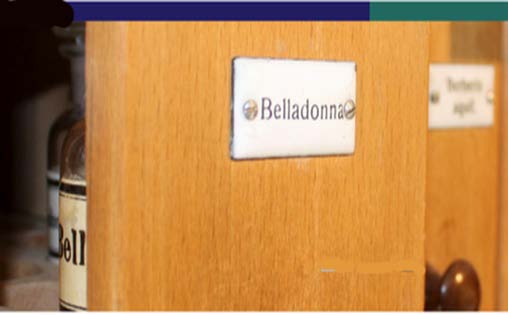
Figure 2. Belladonna drawer, Institute for the History of Medicine of the Robert Bosch Foundation, Stuttgart, Germany
Hahnemann’s original discussion of Belladonna in scarlet fever focused especially on the early stages of the disease. Later homeopathic literature, including the Bönninghausen repertorial tradition, appears to have extended this clinical relevance, treating Belladonna as an important remedy in scarlet fever whenever the totality of symptoms corresponds11.
During a fever epidemic in 1809, Hahnemann prescribed Nux vomica C9 initially, then shifted to Arsenicum album C18 as new symptoms emerged, and used Camphora in material dose as an emergency measure. This case, documented prior to the publication of the first edition of the Organon in 1810, illustrates Hahnemann’s emergent practice of symptom-responsive prescribing and his willingness to adjust remedy selection based on the evolving clinical picture5.
The key observations from Hahnemann’s early phase include:
Grinding and dilution are effective and have no inherent upper limit.
Substances without evident medicinal effect in undiluted form develop therapeutic activity through the process of dilution and succussion (e.g., common salt).
Provings demonstrate that remedies retain biological activity beyond chemically traceable concentrations.
Aggravations can be reduced by extending the interval between doses, sometimes to 35 days or more.
Systematic documentation was recognized as essential, and was stipulated in the first edition of the Organon (1810).
Phase II: Potency, Miasm, and the Genius Epidemicus
The middle phase corresponds to Hahnemann’s period of practice and writing. It produced the fifth edition of the Organon (1833), which introduced C-potencies as a standardized pharmacological system, and the foundational text on chronic disease, in which Hahnemann articulated his miasm theory—positing that most chronic illness originates from suppressed infectious miasms, principally Psora12.
The Asiatic cholera pandemic of 1831 offered Hahnemann one of his most consequential clinical challenges. He initially proposed several Genius Epidemicus candidates in C30 potency for different disease stages. He ultimately settled on Camphora spirit (tincture) as the preferred remedy for all stages, writing that it had “the ability to kill the invisible creatures and eliminate the cholera miasm swiftly”8. Remarkably, this statement was published fifty years before Robert Koch’s 1883 identification of Vibrio cholerae—Hahnemann had hypothesized microbial transmission before bacteriology had provided formal evidence for it.
The clinical results documented in the period literature are striking. Statistical data compiled by Stricker9 from multiple European practitioners treating cholera patients show a general population mortality rate of 50–55%, compared to a 6.7% mortality rate among patients receiving homeopathic treatment. The compiled figures are presented in Table 1.
| Physician | Location | Patients | Cured | Died |
| Schaller | Prague | 113 | 113 | 0 |
| Lövy | Prague | 80 | 72 | 8 |
| Gerstl | Moravia | 330 | 294 | 36 |
| Baer | Prague | 80 | 80 | 0 |
| von Bakody | Prague | 154 | 148 | 6 |
| Lenz | Budapest | 40 | 32 | 8 |
| Mayer | Budapest | 65 | 65 | 0 |
| Vieth | Vienna | 80 | 78 | 2 |
| Vieth, Prof. | Vienna | 50 | 49 | 1 |
| von Lichtenfels | Vienna | 46 | 43 | 3 |
| Marenzeller | Vienna | 30 | 27 | 3 |
| Vrecha | Moravia | 104 | 88 | 16 |
| Schütz | Vienna | 17 | 17 | 0 |
| Lederer | Vienna | 80 | 78 | 2 |
| Total | 1,269 | 1,184 | 85 | |
| Aggregate mortality statistics | ||||
| General cholera death rate | 50–55% | |||
| Reported mortality under homeopathic treatment | 6.7% | |||
Table 1. Mortality outcomes under homeopathic treatment during the 1831 European cholera epidemic. Source: Stricker9
During the 1833 influenza epidemic, Hahnemann prescribed Camphora C30 as the primary Genius Epidemicus, with Nux vomica C30 for more difficult presentations and Causticum C30 by smell in rare cases. His experimentation with olfactory administration—allowing the patient to inhale the diluted remedy from the bottle with repetition every fifteen minutes—was designed to accelerate therapeutic effect without the extended waiting periods required by his earlier, longer-interval protocols3. However, he discontinued this method of administering the remedy soon afterwards.
Potentized remedies in C30 represent the operative pharmacological standard.
The theory of chronic disease establishes the role of miasms—primarily Psora—in underpinning susceptibility to epidemic illness.
Establishes the Genius Epidemicus not as a single fixed remedy but a small selection of remedies, adaptable to the specific character and symptom complex of each epidemic.
In his 1831 cholera treatise8, Hahnemann articulated seven criteria for identifying a valid Genius Epidemicus:
Very simple in composition and application.
Easy to obtain.
Fast in effect.
Most appropriate for the characteristic nature of the disease.
Easily usable by everyone, including untrained laypersons without risk of error.
Totally safe in application.
Prophylactic—it protects the prescribing therapist from infection.
These criteria establish the Genius Epidemicus as simultaneously a therapeutic and a public health instrument, bridging individual treatment and population-level prevention.
Phase III: Q-Potencies, Mental Symptoms, and Consolidation
Hahnemann’s final phase, following his relocation to Paris in 1835, represents the consolidation of six decades of clinical experience. The sixth edition of the Organon, completed in 1842 though not published until 1921, introduced Q-potencies as a refinement enabling gentler, more frequent dosing with reduced aggravations. Hahnemann’s Paris journals remain incompletely researched; written in personal code, they have been partially deciphered through cross-referencing with his correspondence with Bönninghausen4.
A case from 1837 involves a young girl in a state approaching stupor. Hahnemann’s treatment protocol combined Nux vomica C30 (apsoric), placebo, Ammonium muriaticum C30 (apsoric), further placebo, and Phosphorus C30 (antipsoric). The use of placebo was systematic, allowing observation of the remedy’s action without interference. In his notes, Hahnemann emphasized the decisive importance of the patient’s mental and emotional state in remedy selection, writing that the mental condition is often the decisive factor in differentiating the indicated homeopathic remedy, because it belongs among the particularly characteristic symptoms described in Organon §153 and is, as Hahnemann emphasizes in §211, one that can least of all remain hidden from the carefully observant physician13. A case in 1841 involving whooping cough was resolved rapidly with Sulphur Q.
A case of acute psychosis in a pubescent girl treated in 1842 illustrates the full deployment of Hahnemann’s evolved method. He prescribed Belladonna in Q-potency, further diluted in a bottle and then into a glass of water. Hyoscyamus C30 was given as an intercurrent remedy, possibly because this remedy was not yet available in Q-potency. Placebo was used to allow observation. Treatment concluded with Sulphur Q, administered in descending order (Q4 through Q1) until full resolution and discharge. The psychosis was completely resolved. This case demonstrates the fully developed Q-potency protocol and the use of descending potency in the terminal phase of treatment. Modern clinical use of Q-potencies still broadly follows Hahnemann’s principles of dilution, repetition, and careful observation, although contemporary practitioners generally prescribe them in ascending rather than descending order.
Q-potencies enable greater therapeutic effect with less risk of aggravation.
Placebo is used systematically as a clinical observation tool, not a control.
Mental symptoms, as per §211 of the Organon, are the decisive differentiating criterion among closely matched remedies.
After resolution of the acute epidemic illness, continued treatment of the underlying Psora is essential to prevent relapse.
Hahnemann differentiates clearly between apsoric (non-antipsoric) and antipsoric remedies, using the latter in the post-acute phase.
Table 2 presents the distribution of apsoric and antipsoric prescriptions across Hahnemann’s early and late practice periods, based on data compiled by Ritter3.
| Remedy | Category | Prescriptions 1802–1820 | Prescriptions 1832–1840 |
| Alumina | Antipsoric | — | 14 |
| Arsenicum album | Antipsoric | — | 78 |
| Calcarea carbonica | Antipsoric | — | 12 |
| Hepar sulphuris | Apsoric | — | 27 |
| Ignatia | Apsoric | 193 | — |
| Nux vomica | Apsoric | 766 | — |
| Phosphorus | Antipsoric | — | 3 |
| Pulsatilla | Apsoric | 397 | — |
| Rhus toxicodendron | Apsoric | — | 24 |
| Sepia | Antipsoric | — | 9 |
| Stramonium | Apsoric | 13 | — |
| Sulphur | Antipsoric | — | 73 |
| Total | 1,951 | 861 |
Table 2. Number of prescriptions by remedy and miasmatic category, 1802–1820 vs. 1832–1840. Source: Ritter3
The data reveal a pronounced shift from predominantly apsoric prescribing in Hahnemann’s early career toward a more integrated use of antipsoric remedies—particularly Sulphur and Calcarea carbonica—in his Paris practice.
The relative infrequency of Phosphorus and Sepia in Hahnemann’s prescriptions stands in contrast to their prominence in contemporary practice, where both rank among the most widely used deep-acting polycrest remedies. This discrepancy invites reflection; based on the observations of the author and colleagues, it may point to a shift in the prevailing miasmatic burden and disease expression between Hahnemann’s era and the present day. This may suggest that the sycotic miasm occupies a more prominent place in contemporary chronic disease than it did in Hahnemann’s time. Hahnemann’s comparatively brief treatment of sycosis in The Chronic Diseases12, especially when contrasted with his extensive discussion of psora, may reflect the different miasmatic landscape of his clinical era.
The Clificol Covid Support Project, presented at the LMHI Global Colloquium in 2021, conducted a symptom cluster analysis of COVID-19 patients treated homeopathically, identifying two primary Genius Epidemicus clusters6:
Cluster A: Gelsemium (95.6%, apsoric), Bryonia (2%, apsoric), Arsenicum album (1%, antipsoric), Phosphorus (1%, antipsoric), Eupatorium perfoliatum (0.4%, apsoric).
Cluster B: Bryonia (95.1%, apsoric), Phosphorus (4.9%, antipsoric).
These findings are consistent with Hahnemann’s pattern: apsoric remedies dominate the Genius Epidemicus picture during the acute epidemic phase, while antipsoric remedies such as Phosphorus and Arsenicum album appear in secondary or post-acute roles. This aligns with contemporary clinical observations that Bryonia was frequently required during the acute COVID illness, but that chronic remedies such as Phosphorus, Arsenicum album, Lycopodium, and Natrum muriaticum were typically needed afterward10.
A close reading of Hahnemann’s epidemic case records across three phases of clinical development yields the following conclusions, each supported by archival and published evidence:
The Law of Similars (similia similibus curantur) remained the operative clinical principle throughout all phases, including after the introduction of chronic disease theory.
Hahnemann progressed from material doses and low dilutions to highly potentized C- and ultimately Q-potencies, consistently guided by the goal of maximizing therapeutic effect while minimizing aggravation.
The “Totality of Symptoms” remained the guiding prescribing principle.
The Genius Epidemicus is not a single remedy but a small cluster of remedies, adaptable to the specific epidemic character.
Antipsoric remedies are often present in the background of epidemic prescribing, even when not the dominant Genius Epidemicus.
Antipsoric remedies are indicated in the post-acute phase to prevent relapse and address the underlying miasmatic terrain.
Antipsoric remedy use following resolution of the acute epidemic illness appears consistent with Hahnemann’s mature approach and offers a historically grounded framework for considering what is now termed Long COVID.
Conflict of interest: None declared.