by Jay Yasgur
“What Hahnemann discovered is not merely a new way of healing people, a kind of herbal medicine. He entered a new dimension of science and observed reality, which, more than 200 years later, still shocks the scientific community to the point of being rejected without examination, because it would require them to abandon their usual frame of reference and open themselves to a new paradigm.”
– Marie Luc Fayeton, MD
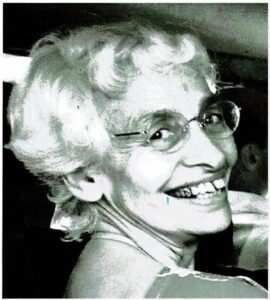 Doctor Simonne Marie Luc Fayeton, physician and Dominican nun and much lauded French homeopath, crossed the threshold on the 2nd of January, 2026, the dawn of her 91st year.She was born on January 20, 1935. She studied medicine in Paris from 1953 to 1960 and defended her medical thesis in October of 1960.
Her initial introduction to homeopathy occurred in 1959 when she studied the French pluralist approach at the Centre d’Etudes Homeopathiques de France (CHF-Paris). Later she admitted,”I found that pluralist prescription was irrational and always used only one remedy at a time.” Dre Fayeton wrote one book, L’homéopathie: Puissance de Guérison (2015; Homeopathy: Power of Healing )
President of the French Association for the Deepening of the Hahnemannian Doctrine, Dr Marie-Josee Grangeon of Le Puyen-Velay, France, wrote:
“She discovered homeopathy thanks to the cure of her father who suffered from severe septicemia. She then began studying homeopathy in Paris with the masters of the time, Vannier and Voisin, whose manuals she wore-out from constantly referring to them; she also studied extensively on her own. In 1967, at the end of her novitiate with the Dominican Sisters, she practiced in emergency housing projects in Toulouse and was then sent for two years to Rwanda, where she had to make the homeopathic medicines she needed herself. (She was called “Mama-bottle” because of the preparation vials she carried with her).
“Upon her return to France in 1969, she was welcomed and even housed by Dr Paul Nogier in Lyon; he led the Groupe Lyonnais d’Etudes Médicales (GLEM; Lyon Group for Medical Studies), providing instruction in auriculomedicine, acupuncture, and homeopathy. It was there that she encountered unicist (classical) homeopathy with Dr Pierre Schmidt (Geneva, Switzerland; she studied with him, 1970-1971) and Dre Marie-Dominique Mureau (Leuze-en-Hainaut, Belgium, she studied with her, 1969-1970). She also studied osteopathy as well as several other alternative modalities including acupuncture with Dr René-Jacques Bourdiol.
“After a temporary position in Le Puy-en-Velay, where a congregation of Dominican sisters was located, she settled, in 1971, as a homeopathic physician, first on Rue des Farges, then in Vals near Le Puy [She practiced in Le Puyen-Velay until 2008], and in 1980 in Brives-Charensac.
“In Lyon, Dr. Nogier entrusted her with teaching homeopathy, which she did with great enthusiasm, using short skits to illustrate the remedies. With a few diligent students, she refined the teachings of Hahnemann and the great masters. In April 1983 in Lyon, she attended a lecture by Dr Alfonso Masi-Elizalde which proved to be a revelation. She then followed his teachings for three years in Florence, Italy.1,2,3
“In 1984, with several colleagues, she founded [and was president until 2008] the Association Française pour l’Approfondissement de la Doctrine Hahemanniene (AFADH; French Association for the Deepening of the Hahnemannian Doctrine) and from, 1986 onwards, Dr. Masi provided teaching in France twice a year until his death in 2003. Dre Fayeton attended all of those sessions. She herself traveled extensively to Canada, Brazil, Germany, Belgium, Italy, Benin, Romania, Russia, Poland, Argentina, Morocco, and other countries to lead teaching seminars: she commented, ‘I went wherever people wanted to understand this new approach to illness and the study of homeopathic remedies (pathogeneses).’
“All her foreign friends were also regularly invited to Haute-Loire for the ‘clinical case festivals’ during the summer. She also cared for and provided accommodation in her home for people suffering from serious illnesses, assisting them in recovery, and enabling them to thrive.
“In February 2022, after 60 years of studying and practicing homeopathy, her health forced her to stop. However, she continued to attend our weekly video meetings.
“The Dominicans are preaching friars, Sister Marie Luc, a Dominican nun, beautifully illustrated this tradition of research and teaching in the footsteps of Saint Thomas Aquinas. We remember her for these aphorisms: ‘I am a doctor by vocation; the patient is my teacher’ and ‘Everyone dies only at God’s appointed time.’”
Mr. Yasgur wishes to acknowledge the help which doctors Maryvonne Cousin (Vice-President of AFADH) and Helene Renoux provided with the above information.
To understand the idiosyncratic symptoms, I considered the chronic symptoms that subsequently appeared in sensitive provers, which are recorded under numbers 8, 15, 22, 26, 39, 40, 42, and 54 in Allen’s work. Among these, numbers 39 and 40 seemed particularly interesting to me, both because they were reported by Hering and because each included multiple cases, some of which presented recurring symptoms over the following years. Among these patients, one was permanently cured of his worm infestation, while others died within 25 minutes. It is not known to which patient the symptoms under number 39 belong, so I considered only the verified symptoms. I eliminated the local organic symptoms, which were a direct consequence of edema (at the level of the tongue, neck, and chest).
To understand the deep core of Vipera, I considered all the symptoms of provers numbered 8, 15, 22, and 26, each corresponding to a single intoxicated individual, as well as the symptoms of number 54, which contain the remedy’s “general notes.” These are generalized toxic symptoms common to all provers and therefore belong properly to the genius of the remedy.
Based solely on these purely physical symptoms, I was able to achieve a spectacular remission of three-and-a-half years’ duration (I dare hope for a cure) in a very severe form of Crohn’s disease with profuse bloody diarrhea and sclerosing cholangitis in a 17-year-old boy named Bruno.
To the pathogenetic profile of Vipera, we can now confidently add the important mental symptomatology that Bruno presented, which was cured with this remedy. This has allowed me to present other cases of Vipera where the remedy was prescribed based on the similarity with Bruno’s mental symptoms, even in the absence of, or with very few, symptoms belonging to the previously known pathogeneses of Vipera, still recorded in Materia Medica today.”